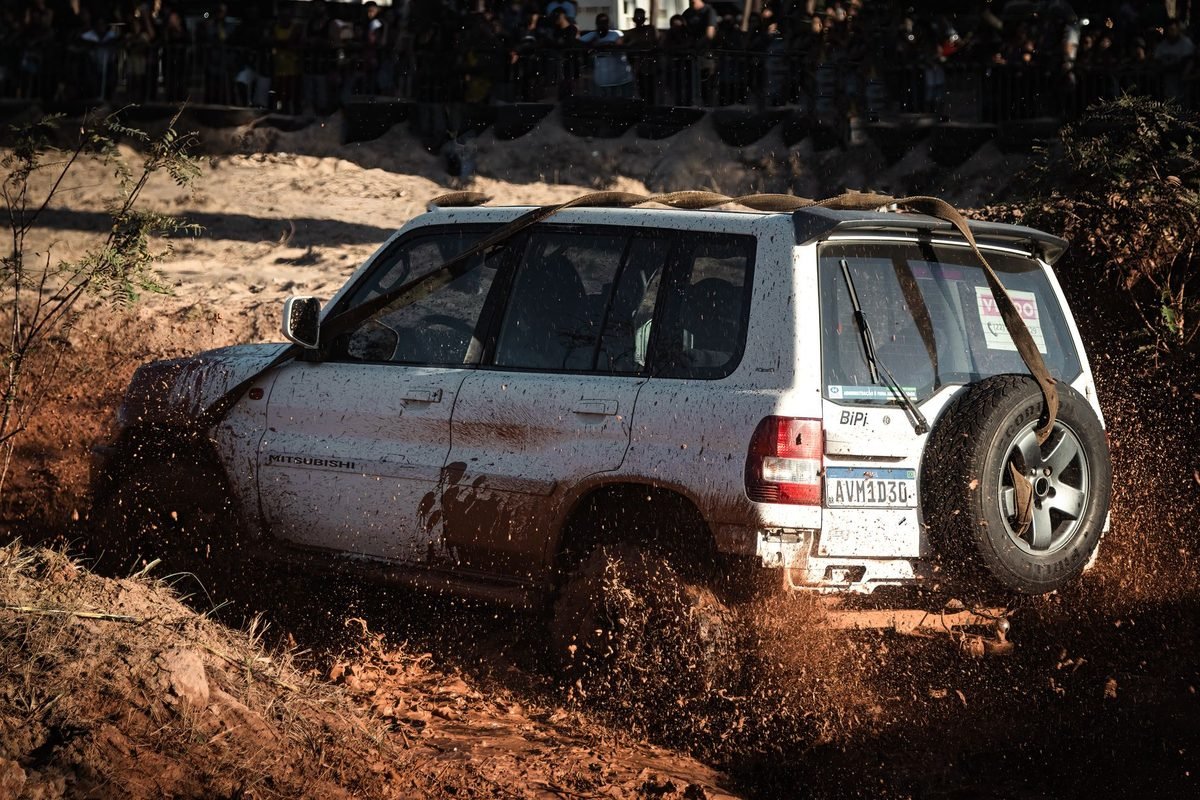
The difficult-looking ground rarely traps anyone. Rock ledges and steep climbs announce themselves and people slow down. Rentals get buried on the ground that looks easy: a smooth brown track an hour after rain, pale sand above the tide line, a ford that ran ankle deep last Tuesday. Three surfaces cause nearly every stuck vehicle around Punta Cana, wet clay, soft sand and storm water, and each obeys a few plain rules.
The field rules, in order of how often they get broken
- Air down for sand. Drop to 16 to 18 psi before the soft stuff at Macao or Esmeralda, not after the wheels are in it. The longer tyre footprint floats the car instead of trenching it, and the fuel stations on the Bavaro side have air for the way back.
- Air up on pavement. Re-inflate the moment you return to tarmac, because distance at low pressure cooks the sidewalls. A cheap 12V compressor and a pressure gauge from a hardware store in town make both halves of this painless.
- Momentum through mud. Wet clay here is grease over a hard base and it punishes hesitation. Steady throttle, gentle inputs, and an early decision: ride the ruts and let them steer you, or straddle them on the crown if clearance allows. The half-in, half-out line is what slides cars sideways into the cane.
- Walk every blind ford. A crossing you cannot see the bottom of and have not walked does not get driven. Walking reveals depth, current, and whether the storm scoured a hole under the smooth water; anything above the door sills, or moving hard at even 30 cm, is a no for a rental. The bill for soaked electronics and carpets lands on you.
- Kill the wheelspin. Come off the throttle the instant the wheels spin, since every second of it digs the car down another few centimetres. Clear sand from all four tyres, drop pressures further, and back out along your own tracks with the gentlest throttle the car accepts. Floor mats under the driving wheels work better than their reputation suggests.
- Price the recovery before the rope. At the known spots, locals with trucks appear fast, and a rescue for a few hundred pesos is part of the local economy rather than a scandal. Agree the number before the rope goes on, and carry a tow strap of your own, because the truck that finds you often has goodwill and no rope.
- Respect the rain window. May through November, afternoon downpours reset every dirt run on the routes page inside an hour. Drive the tracks in the morning, keep afternoons and evenings for pavement, and re-grade any route you drove before the storm.
- Assume the cover stops at the pavement. Standard Dominican rental insurance, including the full-cover packages sold at the counter, excludes damage off public paved roads; some contracts say so plainly, others hide it under negligence clauses applied after the fact. A few agencies tolerate the known beach tracks like Macao when asked directly. Ask directly, and get the answer in writing.
- Expect the undercarriage check. Drop-off inspections here look underneath, and crown damage from a rutted track is the classic charge, taken from the deposit first and invoiced beyond it. Photograph the underside, sills and bumpers at pickup and again at return, dates visible.
- Keep dirt a daylight game. Recoveries, fords and unlit farm traffic all worsen after dark, and the unlit roads here are a separate hazard entirely. Plan tracks for the morning, carry more water than the people in the car will drink, and keep cash in small notes for fuel and negotiated rescues.
None of this is expert technique. It is the boring baseline that keeps a deposit intact and an afternoon off the end of a rope; skip it by handing the whole day to a guided buggy tour, or cover it with ten minutes of reading, a cheap compressor and the willingness to get out and walk thirty seconds of bad ground before driving it.