The short version
Six or more people, or five people with full-size luggage: Tahoe, and the Wrangler is not really in the contest. Four or five people who packed light and want at least two days on dirt and sand: Wrangler. Everything in between comes down to the details below, and most of those details are about boring things like where the bags go and how hot the back seat gets at two in the afternoon.
Seats and luggage: count the suitcases first
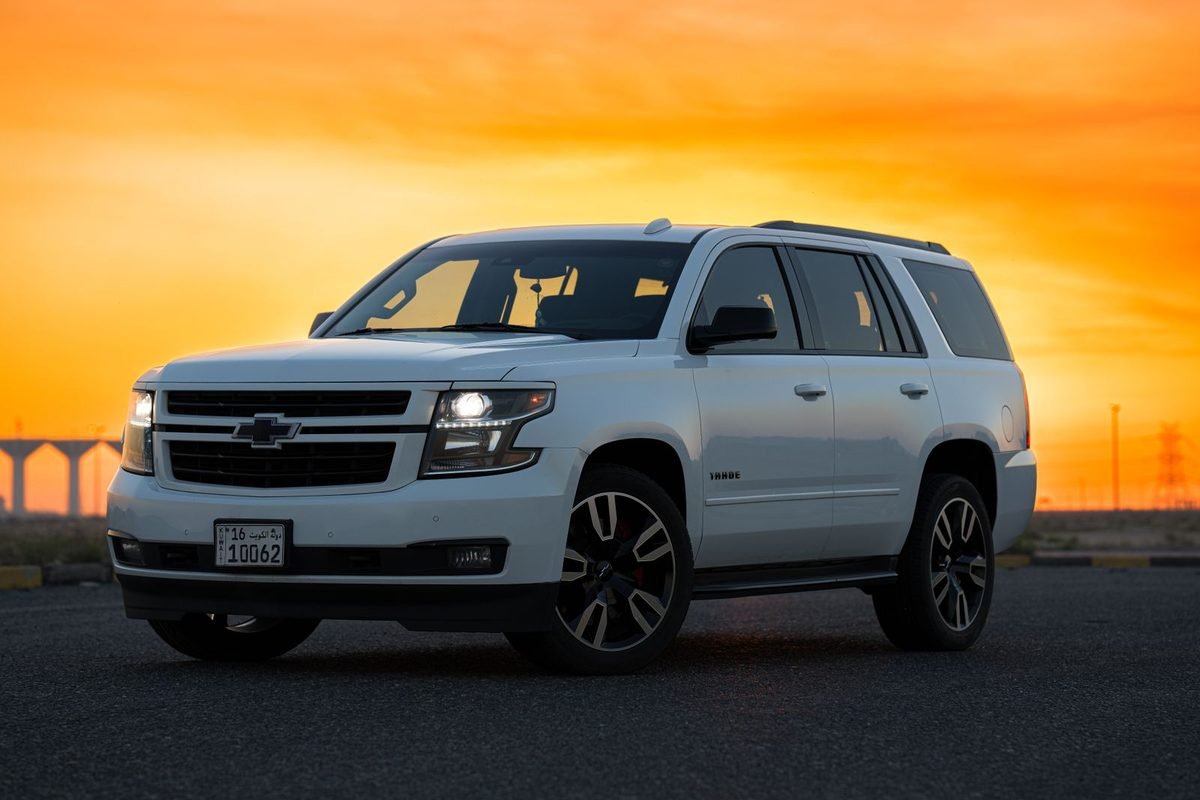
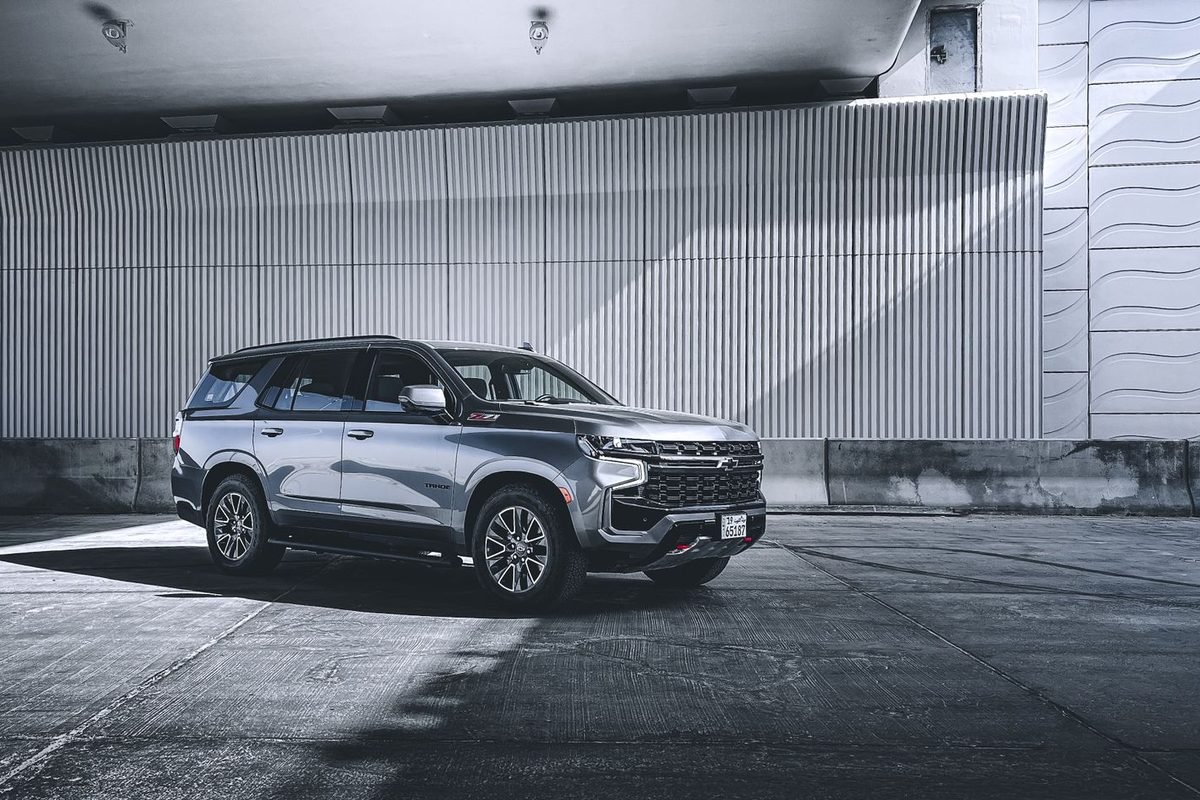
A Tahoe has three rows. Depending on the trim it seats seven (two captain's chairs in the middle) or eight (a middle bench), so ask which layout the actual car has before you plan around a number. On the current generation, sold since the 2021 model year, there is about 25 cubic feet of cargo space behind the third row, roughly 720 litres. That is four large suitcases standing up with soft bags on top, while seven people sit in front of them. Fold the third row and the floor turns into a van.
One warning for anyone handed an older car. The previous Tahoe (2015 to 2020) has a much smaller hold behind the third row, around 15 cubic feet, and a third row that sits low on the floor with knees up. Local lots carry both generations. If seven of you are flying in with seven suitcases, the year of the car matters more than the badge.
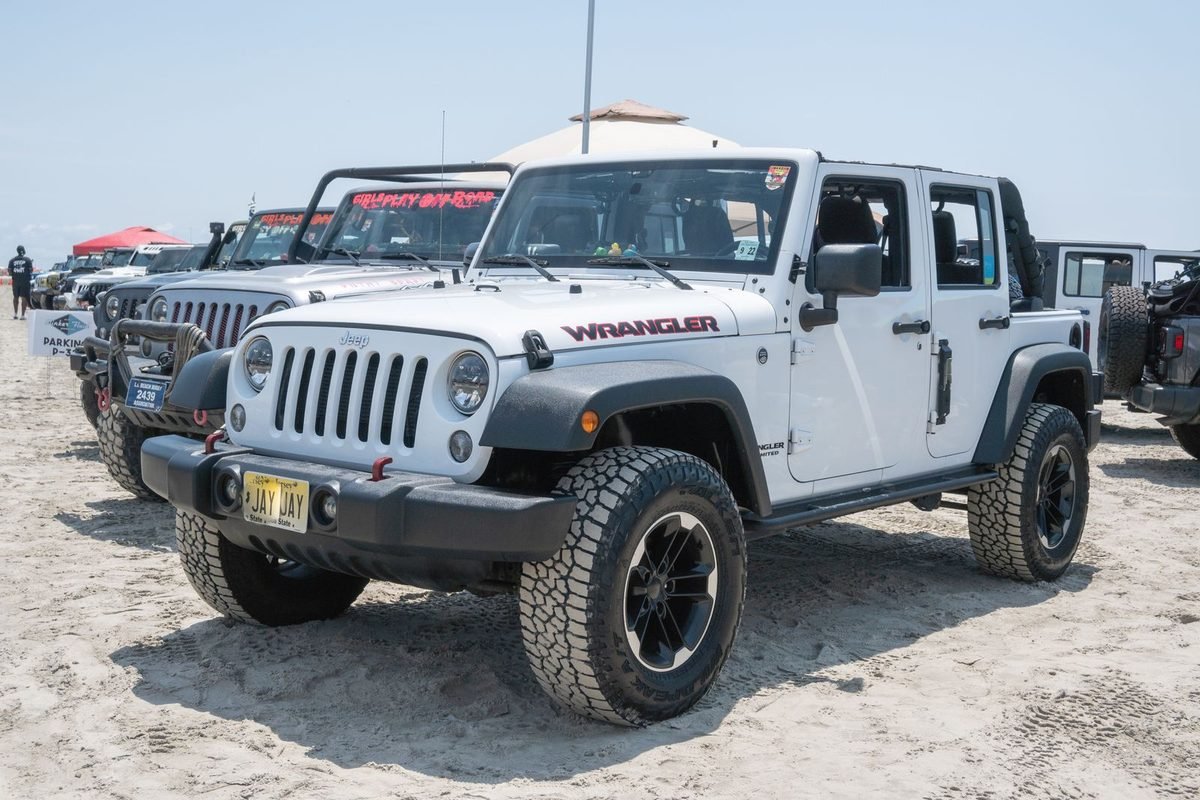
The four-door Wrangler seats five and has about 32 cubic feet behind the back seat, close to 900 litres. On paper that beats the Tahoe with all its seats in use. In practice the space is tall and short, the roll bar and speaker bar eat into the top of it, and with a soft top fitted nothing back there is locked away from a hand with a zip. Five adults plus five big cases is a squeeze that ends with a bag on someone's lap. The two-door Wrangler seats four and carries roughly 13 cubic feet, so for a family week ignore it entirely.
Child seats tip the scale further. Three across the Wrangler's back bench is tight to impossible with modern seats. The Tahoe takes two or three in the second row and still leaves a usable third row for the grandparents or the teenager who wants to be left alone.
A week in the Tahoe
What you notice first is the quiet. Doors shut with a thud, the air conditioning has its own vents and controls for the rear rows, and a toddler who fell asleep at the airport is still asleep at the hotel gate. The ride is soft enough that the unmarked speed bumps on the back streets of Veron and Friusa become a gentle nod instead of a spine check, as long as you slow down for them. Nobody gets sunburned through the roof.
The Tahoe has a second life in this country beyond rental lots, because it is a favourite family and executive car in Santo Domingo and Santiago. Families who relocate here, or who come back every winter for months at a time, often stop renting and start pricing a purchase, and scrolling through Tahoe listings for sale in the DR shows quickly which years and trims circulate locally. Buying is a different project from renting: the title transfer (traspaso) goes through the DGII, the marbete sticker is renewed every year, and the mandatory seguro de ley has to be in place before the car moves.
The weak points are size and weight. A Tahoe is about 5.35 metres long and over two metres wide before the mirrors, and it weighs around two and a half tonnes. Many of them are rear-wheel drive only, on highway tyres. All of that is irrelevant on asphalt and becomes the whole story the moment the surface turns soft.
A week in the Wrangler
Kids love it before it has moved. The doors look like they belong on a toy, the roof comes off, and the drive to the beach turns into part of the day instead of the gap between two parts of it. With the hardtop, two panels above the front seats lift out in a minute. With the soft top, the whole roof folds back and the rear windows zip out.
Then the Caribbean sun does what it does. Between about eleven and three, an open Wrangler is a frying pan for whoever sits in the back, and small children cannot tell you they are overheating until they already are. Families who enjoy the open roof use it early and late: the run to breakfast, the last hour before sunset. Midday, the top goes back on and the air conditioning earns its keep. Bring hats that tie on, sunscreen for the tops of knees, and a dry bag for phones, because afternoon showers arrive faster than a soft top goes up.
Comfort is the honest trade. The Wrangler's solid front axle makes the steering vague at speed, the cabin is loud, and the back seat is upright with less legroom than the outside suggests. For twenty minutes to Macao none of that matters. For two and a half hours to the capital it matters to everyone on board.
On the highway: Autovia del Este and the Boulevard
The road west toward La Romana and Santo Domingo (the Autopista del Coral, which hands over to the Autovia del Este) is a fast, mostly smooth toll highway. Keep pesos in the door pocket for the booths. Out there the Tahoe is in its element: long wheelbase, low engine revs, a cabin where the back row can hear the front row. Crosswinds over the cane fields barely move it. The same wind pushes a Wrangler around enough that the driver is correcting all the time, and a soft top drums above 100 km/h.
The Boulevard Turistico del Este, the spine that runs from the airport past Bavaro and on toward Macao and Uvero Alto, is a different kind of driving: roundabouts, resort entrances, motoconchos filtering on both sides, the occasional bus stopping where it likes. Speeds are lower, so the Wrangler's noise fades and its upright seating and square corners make it easy to place. The Tahoe is perfectly calm here too. You just carry more vehicle into every roundabout and need a longer gap to pull out.
Sand: Macao, Juanillo and where each one stops
Juanillo sits inside Cap Cana. You pass the security gate, follow paved roads and park in a proper lot a short walk from the water. A Tahoe is ideal for it: everyone arrives cool, the beach bags and the stroller ride in the back, and four-wheel drive never enters the conversation.
Macao is the opposite kind of beach. The approach to the main entrance is firm, and after that the parking areas and the tracks along the shore are sand, packed in some places and sugar-soft in others. A heavy rear-drive SUV on road tyres can park at the firm edge and that is where it should stay. Put a Tahoe's rear wheels into the loose stuff and two and a half tonnes will dig straight down. A Wrangler in four-wheel drive, with a little air let out of the tyres, idles through the same patch and delivers the cooler to the tree you picked. The details of driving on sand, and of what rental coverage quietly excludes once you leave the pavement, are on the off-pavement driving page, and they apply to a Jeep as much as to anything else.
So the split is simple. If your beach list is Juanillo, Bavaro and the hotel's own stretch of sand, the Tahoe loses nothing. If it includes the quiet ends of Macao or the tracks north of Uvero Alto, the Wrangler is the one that gets you there, and a Tahoe with four-wheel drive only gets you part of the way, because weight and tyres still count.
Fuel and parking
Neither is cheap to run, and the gap between them is smaller than people expect. A V8 Tahoe averages around 14 litres per 100 km in mixed driving. A V6 Wrangler manages around 12, held back by its brick shape. Fuel here is sold by the gallon at attended stations, with prices set by the government every week. Over a typical 600 km family week the Tahoe burns perhaps three or four gallons more than the Jeep. That difference is real, but it should not decide the booking. Daily rate and deposit hold move the total far more, and the rates page shows how both swing between seasons.
Parking is where the Tahoe asks for patience. Resort lots and the plazas in Bavaro and Los Corales are marked out for compact cars. At 5.35 metres the Tahoe hangs out of a standard bay, and reversing it between a wall and a row of scooters takes a camera, a spotter, or both. Villa driveways and hotel porte-cocheres are usually fine. The four-door Wrangler is more than half a metre shorter and you can see all four corners from the driver's seat. What it lacks is a place to hide anything: with a soft top, the rule is that the car gets left empty every single time.
Side by side
| Chevrolet Tahoe | Jeep Wrangler 4-door | |
|---|---|---|
| Seats | 7 or 8 in three rows | 5 in two rows |
| Luggage with every seat in use | About 720 litres (2021 and newer); around 430 on older cars | About 900 litres, tall and short, not secure under a soft top |
| Child seats | Two or three in row two, third row still usable | Two comfortably, three is a fight |
| Length | About 5.35 m | About 4.8 m |
| Highway comfort | Quiet, stable, rear air conditioning | Loud, busy steering, tiring after an hour |
| Soft sand | Stay on the firm edge | Built for it, in four-wheel drive |
| Fuel in mixed driving | Around 14 L/100 km | Around 12 L/100 km |
| Resort and plaza parking | Awkward, overhangs the bay | Easy |
| Roof | Fixed, full shade | Opens; plan around midday sun and showers |
| Leaving things in the car | Out of sight behind tinted glass | Leave it empty |
The verdict by family type
- Two parents, two or three small children, car seats and a stroller: Tahoe. Shade, cold air and space for the gear beat an open roof that the kids can only enjoy for an hour a day.
- Two parents and two teenagers who packed backpacks: Wrangler. This is the family it was made for. Take the hardtop if a long day trip is on the plan.
- Three generations, six to eight people: Tahoe, and confirm the seat count and the model year in writing. The alternative is two cars, which costs more and splits the group.
- Five adults sharing a villa: Tahoe if you arrive with checked bags, Wrangler only if everyone travels with a cabin case.
- A week that is mostly resort with two adventure days: a quiet three-row SUV for the week and a Wrangler for those two days often suits each day better than a Wrangler for all seven.
- A stay of months, not days: the Tahoe's comfort wins over time, which is exactly why long-stay families end up shopping for one.
Whichever way you lean, ask the lot for the exact vehicle and not just the class: the model year, the seat layout, hardtop or soft top, two-wheel or four-wheel drive. Reservations in this town are made against a category, and the category can stretch. The fleet page sorts the common models by what they can really do off the pavement, including the mid-size seven-seaters that sit between these two and suit a lot of families better than either extreme.